The True Account Behind Casino Licensing

We commonly hear that a casino is “fully licensed, Wincleo player login, ” but not many players stop to examine what that actually means. A licence is not a free pass handed out easily. It is a earned operational certificate that requires an operator to particular laws, player-protection rules, and financial audits. Grasping this system shifts how you choose where to play.
Why Licensing Is the Primary Factor We Check
Before we ever spin a slot or place a bet, the regulatory badge at the footer of the homepage tells us everything. A proper licence means the platform submits to external oversight. It proves that a third party with real legal power can sanction the operator for misconduct, creating a protection between your deposit and bad actors.
For UK players, this is not a theoretical exercise. The Gambling Commission has the authority to impose multi-million-pound fines and revoke licences. When we play at a regulated venue, we are shielded by strict rules on fund segregation, implying our deposits remain in protected accounts distinct from the company’s day-to-day operating cash.
The Contrast Between Acknowledged and Dubious Licences
Not every licences are equally important. A seal from a jurisdiction with lax enforcement offers little practical protection. The most reputable authorities require rigorous identity checks, regular technical audits of random number generators, and proof of financial stability. A weaker licence might demand little more than an annual fee.
We ought to seek regulators that consistently disclose enforcement actions. If a regulator never penalises anyone, it is likely not supervising its licensees properly. The strongest jurisdictions maintain public registers where you can check a brand’s status in an instant. This transparency is the hallmark of a professional operation.
The Facts of International Licensing Bodies
The Malta Gaming Authority remains a giant in the European market, and many brands holding UK licences also carry an MGA license. The MGA framework is solid, with a significant concentration on technical compliance and game fairness. Its player-protection rules closely mirror many UK standards, establishing a high baseline.
We also come across the Gibraltar Regulatory Authority and the Alderney Gambling Control Commission. These are smaller but highly expert bodies. They often oversee the B2B software providers that drive the games, meaning a casino might be indirectly safeguarded by their standards even if the direct consumer licence comes from elsewhere.
Curacao and the Warning Signs
Curaçao is a frequent topic of confusion. Historically, a single master licence included hundreds of sub-licensees, with minimal oversight. Recent reforms are splitting this into a new independent regulator, but the aftermath of loose enforcement lingers. We recommend caution: a Curacao seal alone seldom delivers the financial safety net UK players expect.
The practical warning sign is the speed of dispute resolution. Top-tier regulators have formal mediation services. If a casino cheats you on a withdrawal, you have a clear path to appeal. In weaker jurisdictions, that path is often a dead end, giving you with no recourse beyond online forums.
Game Categories and the Fairness Benchmark
Any game category you browse—slots, live casino, table games, or instant wins—operates under the same regulatory umbrella. The live dealer studio streaming from a physical location must be regulated and audited just as thoroughly as a digital slot. Cameras are watched, deck shuffles are verified, and dealer conduct is reviewed.
Slots operate on certified return-to-player models, typically ranging from 94% to 97% varying by the title. These figures are not marketing fluff; they are confirmed by test labs. The licence ensures that the theoretical payout percentage is the actual one, determined over millions of spins, not a rigged illusion.
Live Dealer Casino and the Personal Touch
Live casino licensing introduces a layer of physical oversight. The studio must obtain a separate supply licence in many jurisdictions. Regulators check the premises, verify the equipment, and make sure the shuffling machines are tamper-proof. We are not just relying on a software algorithm; we are depending on a physically audited environment.
This is why authentic live casino experiences come across different. The dealer’s actions are recorded, and disputes can be reviewed frame by frame. A licence guarantees that the video feed is not manipulated and that the cards you see are the cards you get, distributed in real time with no digital sleight of hand. see here
Mobile Play and Compliance with Regulations
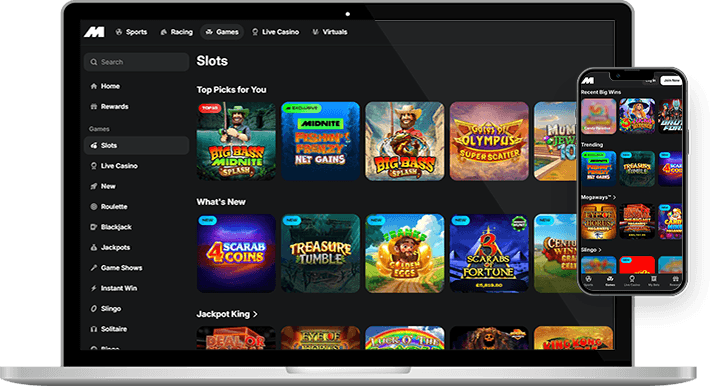
The equipment you employ does not modify the rules. If you play on a desktop in London or a cell phone in Manchester, the licence applies to every transaction. The identical identity checks, the identical game certifications, and the uniform deposit limits apply consistently across all systems.
We allocate significant resources in mobile-responsive technology not just for convenience but because the authority requires uniform protection. A slot that operates flawlessly on a computer must also run fairly on a smartphone. The random number generator does not concern itself with screen size, and the audit log must be uninterrupted across systems.
The Bonus Structure Under Regulatory Oversight
Promotions are the sharp end of the licensing stick. We are unable to promote a headline-grabbing offer and then bury unrealistic terms in the small print. Regulators now require that important conditions, like betting requirements and game contributions, are displayed clearly and in simple terms right next to the offer.
Wagering requirements themselves are constrained. While a 35x or 40x playthrough is standard, the licence prevents us from setting statistically unfeasible targets. The rules also restrict how long you have to meet the wagering. We cannot set a seven-day limit that compels reckless play to meet the deadline.
Game Contributions and Restricted Play
We must clearly state that not all games contribute equally to wagering. Slots usually contribute 100%, but table games like blackjack might contribute only 10% or be excluded entirely. This is not a deception; it is a industry norm, but the licence requires us to spell it out before you activate the bonus.
If you try to clear a bonus on a restricted game, the system will block it. This is a regulatory function, not a punitive measure. The regulator wants to stop the scenario where a player unintentionally voids a bonus by playing the incorrect game, so the software implements the rules automatically.
In what manner Licensing Secures Your Payments and Information
Processing payments is a complicated regulatory landscape, and that is a beneficial situation. A licence forces us to use PCI-compliant payment gateways and to adhere to strict anti-money laundering rules. Each transaction, from a ten-pound deposit to a four-figure withdrawal, is tracked and checked for suspicious patterns.
Information security is just as important. A valid license requires compliance with data security standards that dictate how we hold, encode, and transmit your personal details. We are not allowed to accumulate data without limit. Defined retention guidelines must be in operation, and you have the entitlement to request deletion of your records.
Payout Timelines and the True Nature of Managing
Regulated casinos must handle withdrawals swiftly, but the definition of “prompt” differs. The UK Commission demands operators to handle payments without excessive waiting. In reality, we see e-wallet withdrawals often completed within 24 hours, while bank transfers might need three to five business days.
Holding periods are where regulation bites hardest. We cannot implement indefinite “reverse withdrawal” periods designed to persuade you to cancel and play. The rules limit how long a withdrawal can remain in a pending status, closing a loophole that unregulated sites infamously exploit to recover winnings.
In what ways the UK Gambling Commission Shapes Your Experience
The UK Gambling Commission doesn’t simply issue permits; it dictates how a casino needs to act from the moment you sign up. Its rules impact every part of the customer journey, from the language used in marketing emails to the speed of withdrawals. Compliance is mandatory, and the Commission’s audit trail is unwavering.
One of the most visible impacts is the mandatory identity verification process. We can no more deposit and play anonymously for days before submitting documents. The Commission demands operators to verify your age and identity before you can deposit a single pound. This can seem like friction, but it stops underage gambling cold.
Source of Funds and Affordability Checks
Beyond identity, the conversation around source of funds checks is increasing in volume. We are witnessing more requests for proof of income or bank statements, especially at higher deposit thresholds. This is not the casino prying; it is a regulatory requirement meant to prevent crime and reduce gambling-related harm.
These checks are frequently triggered automatically by algorithms that monitor spending patterns. If a player’s deposit velocity suddenly jumps, the system highlights it. While some find it intrusive, it represents a fundamental shift toward proactive player protection rather than reactive punishment after the damage is done.
What a Permit Really Expects from Wincleo Casino
When we operate under a respected licence, we surrender a degree of autonomy. Our rules and conditions cannot be a tangle of unjust terms. The governing body requires plain wording, open bonus terms, and explicit wagering demands. This is why reading the terms at a licensed casino feels different from reading them at an unregulated one.
We likewise present our games for third-party examination. All slot and table games receive certification to verify the random number generator is authentically random and the declared payout percentage is precise. This testing is continuous, not a one-off event. A game cannot launch without a certification from an accredited testing lab.
Monetary Audits and Asset Safety
Authorized operators must show they possess adequate cash reserves to protect player balances. We cannot use your deposits as venture capital to fund marketing campaigns. Yearly audits by leading accounting companies confirm this financial health, guaranteeing that if we shut down tomorrow, player money would be fully repaid.
This division of assets is a legal barrier. In the unlikely event of insolvency, your balance is not lumped in with general creditors. It resides in a dedicated customer account, isolated and secure. This is an essential requirement of possessing a legitimate license in Europe.
FAQ
How can I verify a casino’s licence is genuine?
Scroll to the footer and select the licence badge. It should point to the regulator’s public register. Avoid believing a static image. The register entry will reveal the company name, licence number, and current status. If the link is broken or redirects to a generic homepage, that is a red flag.
What happens if a licensed casino refuses to pay me?
First, bring up the issue through the casino’s formal complaints procedure. If the response is inadequate, you can take the case to the regulator’s alternative dispute resolution service. This independent adjudicator examines evidence from both sides and delivers a binding decision the casino must respect.
Is a licence a guarantee my money is safe?
A licence from a top-tier regulator makes your funds significantly safer because of mandatory fund segregation. It does not remove investment risk, but it secures your balance is held in a ring-fenced account separate from operational capital. In insolvency, you stand ahead of general creditors for return of your deposits.
Why do regulated casinos request so many documents?
This is a legal obligation under anti-money laundering and know-your-customer laws. We must validate your identity, age, and sometimes your source of funds. Failing to do so can lead to massive fines for flashscore.com the operator. The documents are encrypted and stored securely, utilised solely for compliance purposes.
Are mobile casinos licensed differently from desktop sites?
No, the licence encompasses the entire operation regardless of device. The same regulatory standards are relevant to the mobile app, the mobile website, and the desktop platform. Game fairness, deposit security, and identity checks are identical. The regulator reviews the entire technical ecosystem as a single entity.
Can a casino lose its licence over unfair bonus terms?
Yes, regulators regularly examine marketing materials and terms. If a bonus is deemed misleading or the wagering requirements are structured to trap players, the regulator can impose sanctions, require immediate changes, and in severe cases revoke the operating licence. Transparency is a binding condition.